A HOPE FOR FUTURE RECONCILIATION
Welcome! In this week’s edition of Identity and You, student #31118751 will discuss the ongoing and underlying cultural divide present in Australia today, and how the didactic, textual form of film can easily shape our perceptions on racial and cultural discrimination.
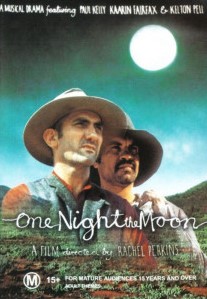
In Rachel Perkins’ hybrid short film, One Night the Moon (2001), musical-drama and documentary are fused together to represent and interrogate the ever-present fragmentation between Indigenous and non-Indigenous peoples during 1930’s Australia. Through use of the flipped ‘lost child’ trope, this archetypal tragedy encapsulates the vastness of the desolate Australian landscape in order to challenge its viewers’ perceptions of the differences in individual and collective identities and cultural discrepancies still present in modern-day Australia.
Cultural Divide
The aforementioned fragmentation between Indigenous and non-Indigenous peoples is explored extensively throughout the course of One Night the Moon. Perkins allows her audience to consider the cultural, historical and social disparity between ‘black’ and ‘white’ Australians through its representation in main characters Jim Ryan; a post-colonial British settler, and Albert Yang; a highly-skilled ‘blacktracker’. The orientation scene, ‘Going to Church’, highlights the polar opposites of the social hierarchy – that is, inferiority and superiority – through use of cinematography, instrumentation and costuming.
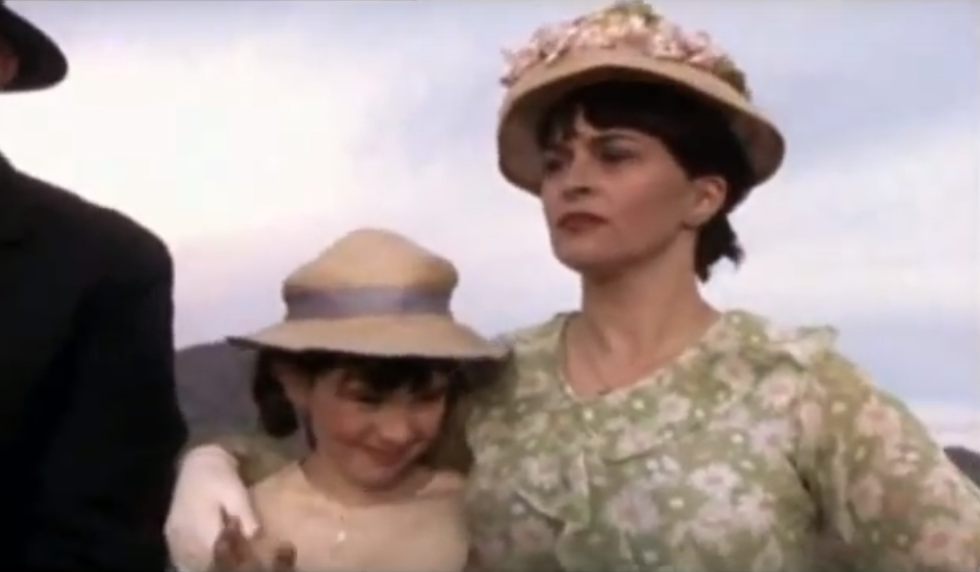
At first, we see the Ryan family – Jim, his wife Rose and their daughter, Emily – travelling by carriage to church, dressed in traditional English attire. Their incongruous ‘Sunday best’ paired with the overlay of non-diegetic Uilleann pipes juxtapose with the harsh Australian landscape, therefore symbolising and representing the family’s displacement in stolen land and their British, presumably Irish, heritage. With their journey along the dirt road to metaphorically convey their lack of Indigenous knowledge of the landscape, it is evident that the Ryans display racist, prejudiced attitudes towards the Yang family. This idea is furthered by the recurring mid-shots of Jim and Rose’s fixed glares as they ignore the family walking alongside them.
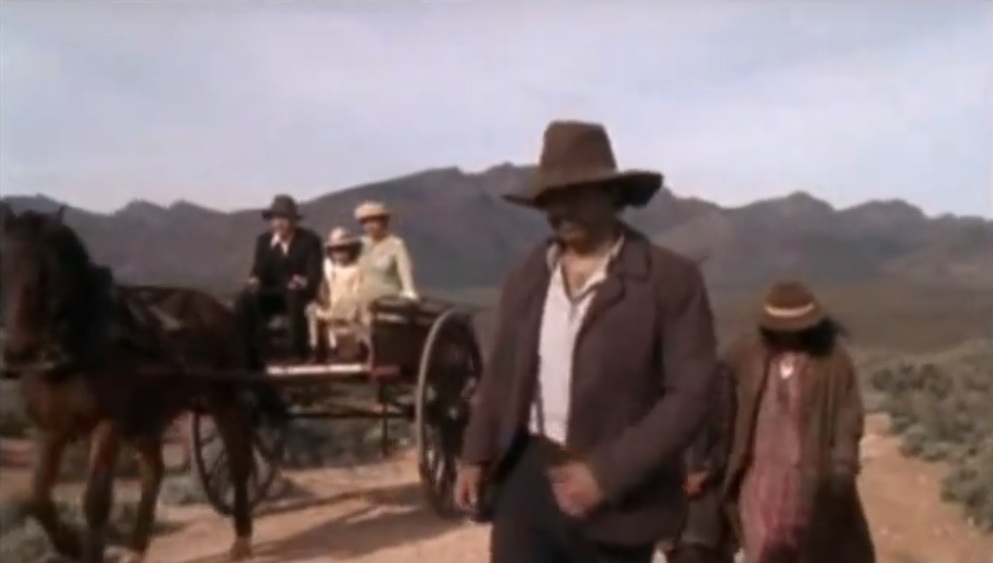
The inferiority and rejection of Aborigines is depicted through the elevated shot from the Ryan family’s point of view, as they not only figuratively, but also literally, ‘look down’ upon the Yang family; and vice versa, placing both cultures in the nuances of social order. The chasm of ‘black’ and ‘white’ Australians, as well as the idea of ‘generational racism’, are both conveyed through the innocent, friendly wave exchanged between the two children. As Emily waves and smiles at Albert’s daughter, before it is quickly concealed by Rose, it becomes undeniable to the audience that racism is not an inherent response but rather a result of ‘cultural conditioning’.
Thus, Perkins uses cinematography, instrumentation and costuming to urge her audience to develop different or new perspectives of the cultural divide in regards to Indigenous and non-Indigenous Australians as it was, and apply it to their 21st-century reality.
Cultural Values: European vs. Aboriginal
Similarly, the epitome of cultural discrepancies lies within the ‘This Land is Mine/Me’ sequence; a counterpoint ballad sung between Albert and Ryan in which two alternating, cultural values are starkly contrasted. Perkins uses lyrics and instrumentation in the ballad to emphasise the two different perceptions of land ownership and contested ideologies to her audience.
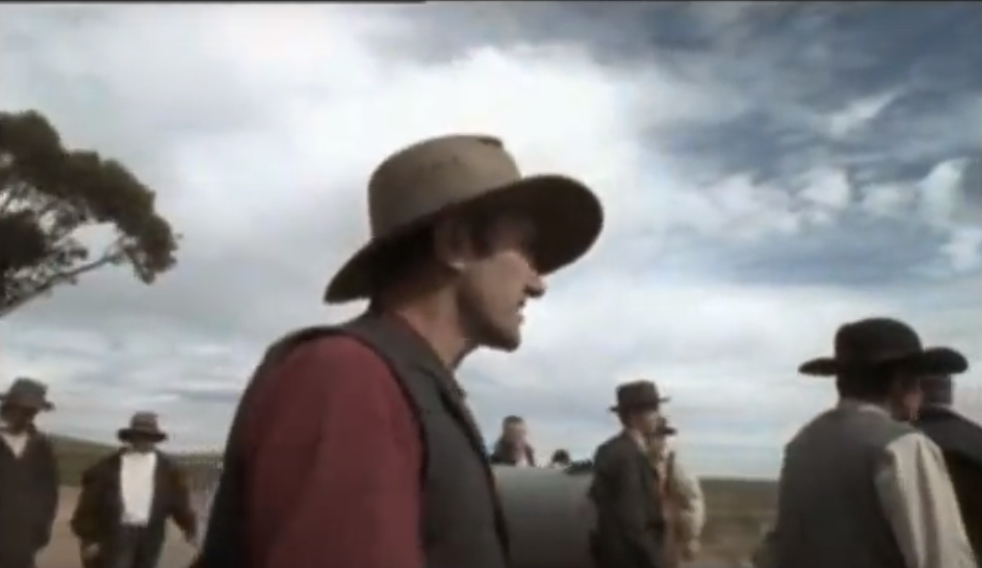
In the beginning, violins are heard alongside Uillean pipes to create tension within the scene; symbolic of the cultural tensions between Indigenous and non-Indigenous Australians. It is obvious that Jim holds a lack of experience and knowledge as he is seen hopelessly organising a search party; and at the same time, slowly being ‘consumed’ by the vast Australian landscape. His strident, nasally voice sings of the “…old fence line” as well as the personified “…bank breathing down my neck”, revealing the typical, white capitalist culture of European settlers in Depression-era Australia.
Meanwhile, Albert sings of “rock, water, animal and tree” in a deep, earthy baritone voice and it becomes evident that he values a land of ancestry from “…generations past to infinity”. Through the inclusive term ‘me’, Albert is distinctly contrasted to Jim as he reveals an intimate and intrinsic connection to his land, rather than one that is merely built on profit and possession. Again, Jim’s refusal of Albert’s expertise is reinforced as Albert vexingly declares “you only fear what you don’t understand”, and thus Jim’s rejection is a result of his underestimation of Indigenous historical knowledge.
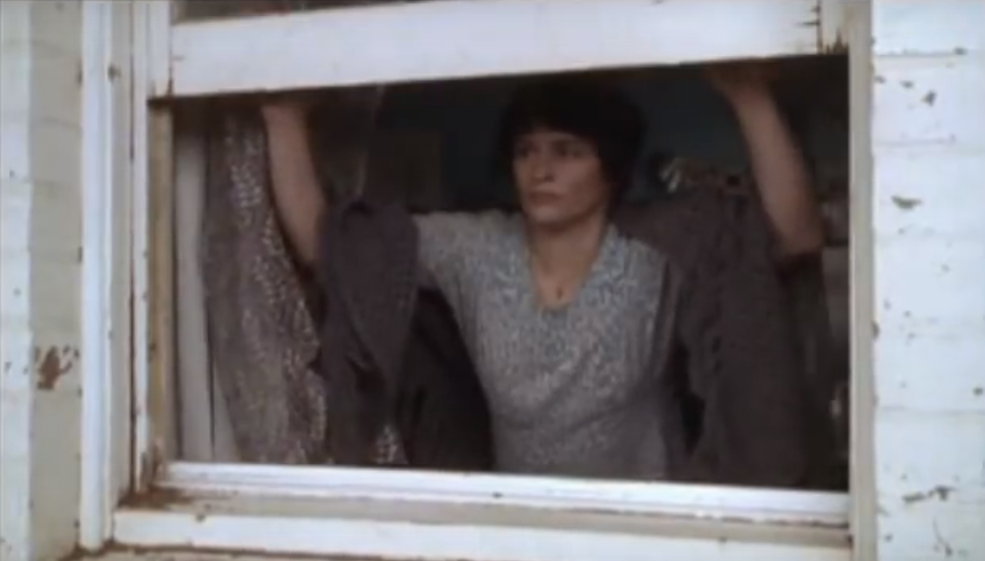
Finally, the sequence ends with the low-angle shot and ambient diegesis of the eagle amongst the harsh Australian landscape, with strengthens the notion of Albert’s derivative and embedded knowledge and geographical oneness. Thus, Perkins use of lyricism and instrumentation in the ‘This Land is Mine/Me’ sequence challenges her audience to reflect on the cultural differences between Indigenous and non-Indigenous Australians in regards to land ownership, contested ideologies and cultural values.
The Potential of Women to be Mediators for a Reconciled Generation
The film acts as a Bildungsroman for Rose Ryan, as she blossoms from her inherent racism into openly accepting and recognising Albert’s knowledge; resulting in the discovery of her late daughter towards the end of the film. Bernice, Albert’s wife, sings a Christian hymn – “Oh, breathe on me, O’ breath of God” – as a harmonious gathering of cultures is shown, signalling the first steps of reconciliation. The shared grief shown at Emily’s funeral provides hope for the future towards building a reconciled generation. Through close proxemics, the idea of a ‘common grief’ is supported by Albert as he is seen to console Rose through a comforting embrace. No longer silenced, yet isolated in the presence of the visual mise-en-scene of a white cross, Rose’s acceptance of Indigenous wisdom is accented; despite paying with the life of her daughter.
Finally, the overhead zoom shot lifted from Emily’s casket and across the Australian landscape serves as a visual metaphor of Emily’s spirit; capturing the effects one’s ignorance can have on not only those thought as inferior to them, but also those of their kind. The audience resonates with and learns from Rose as they realise the effects of discrimination on Aborigines past and present.
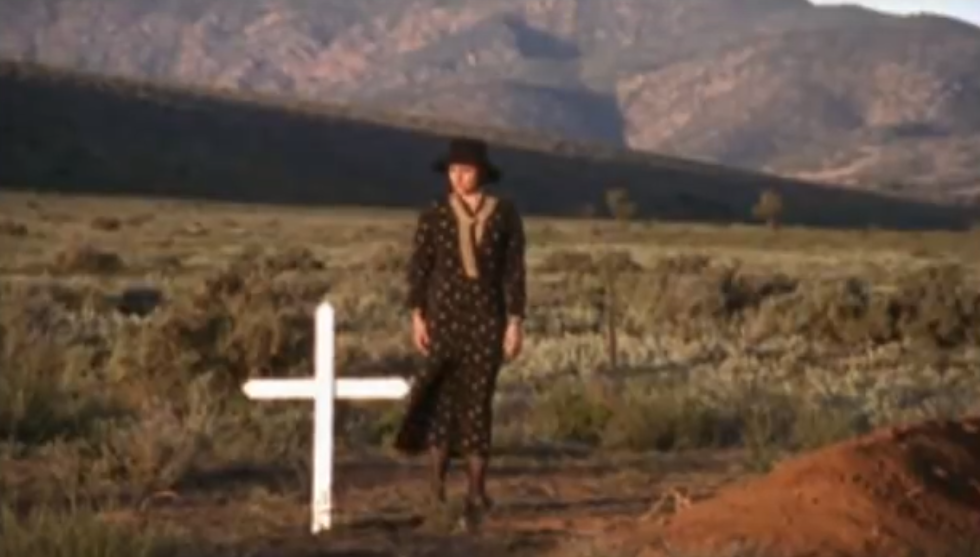
The push for future reconciliation is asserted through a quote from Perkins’ father;
“We know we cannot live in the past but the past lives within us.”
Charles Perkins (1936-2000)
A Lesson Learnt
Thus, through evaluation of Rachel Perkins’ short film One Night the Moon, we are able to understand how the language and textual form of film can enable us to shape different or new perspectives of the discrepancies in individual and collective identities, as well as the ongoing and ever-present fragmentation between Indigenous and non-Indigenous Australians. Perkins’ film acts as a catalyst for the next generation of harmonious and reconciled cultures.
 Identity & You